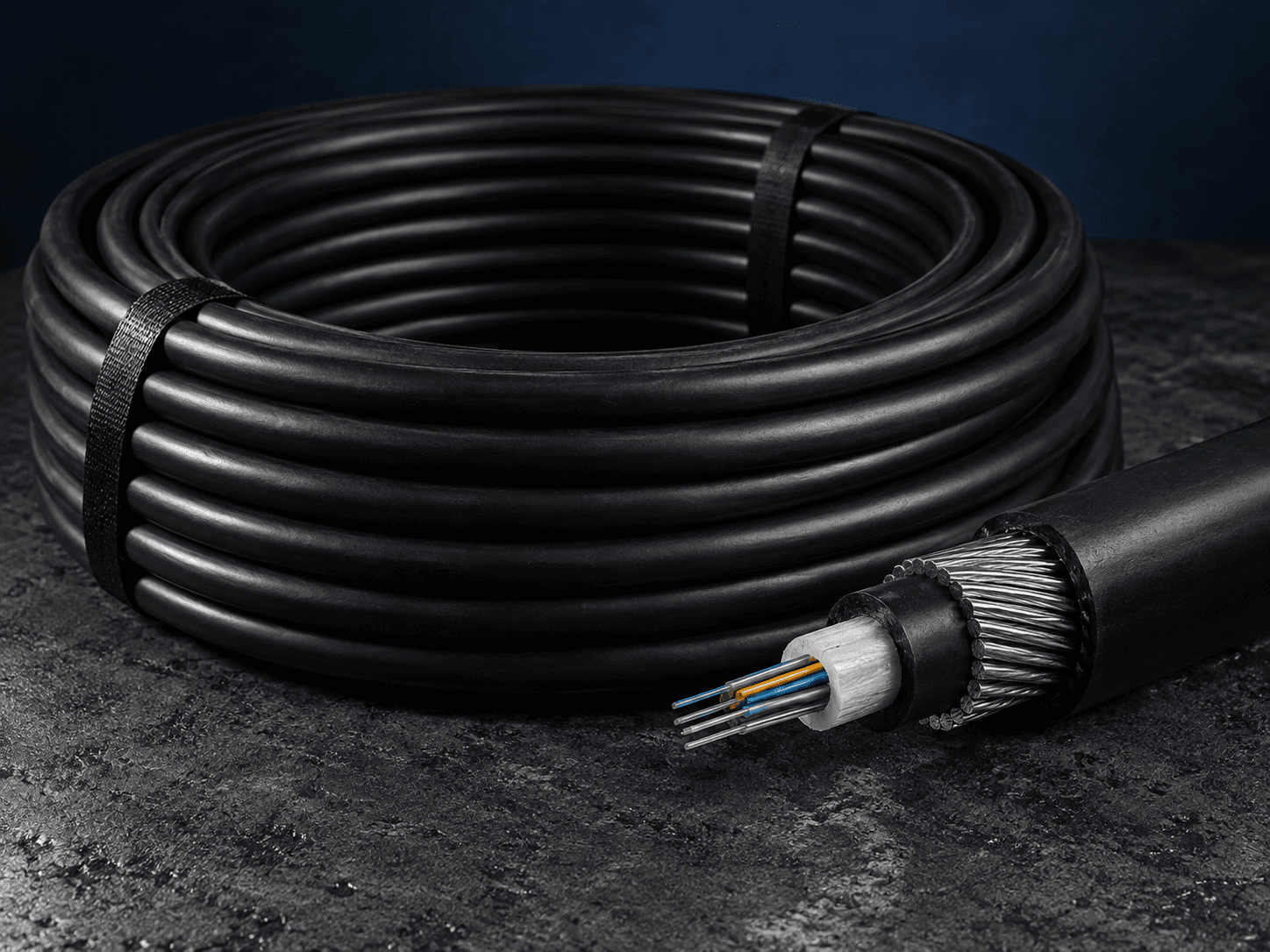
Let the route define the cable, closure and delivery plan.

Plan outside-plant fiber supply with route-specific cable construction, installation loads, closures, drum lengths, environmental evidence and receiving checks.

Send Your Requirements
Armored fiber optic cable prepared for an outside-plant route

Outside-plant risk starts before the cable reaches the trench or pole.

Duct, direct-burial, aerial and facade routes expose cable to different pulling, crush, bend, water, temperature, UV, support and access conditions. A generic outdoor label does not define which construction can be installed on a particular route.

FiberXi can support cable, closure and related passive supply when the route requirements are documented. Civil design, span calculation, grounding, permits, safety and final installation engineering remain with the project owner and qualified contractors.

DUCTPulling and pathway fit
AERIALSupport-system interface
BURIALProtection and water control

Translate field conditions into a released construction.

Record the installation method and acceptance boundary for every route segment before choosing a cable name.

01

Route and installation method

Document duct size, pulling access, trench protection, pole spans, support hardware, entries, transitions and maintenance points.

  • Duct, direct-burial, aerial or facade section
  • Pulling, blowing, lashing or suspension method
  • Handholes, poles, buildings and closure locations
02

Cable construction

Connect the route loads and exposure to fiber count, tube design, strength members, armor, water blocking, jacket and handling limits.

  • Installation and long-term tensile boundary
  • Crush, bend, water, UV and temperature requirements
  • Metallic components, grounding and lightning considerations
03

Splicing and re-entry

Choose closure size, cable ports, sealing method, trays and slack storage from the planned splice, branch and maintenance arrangement.

  • Inline, butt or branch topology
  • Cable diameter and entry hardware
  • Tray capacity, express fibers and re-entry plan
04

Drums, shipping and receiving

Plan factory lengths from route sections and pulling access, then protect, identify and inspect drums before installation starts.

  • Drum length, tolerance and cut plan
  • Flange protection, end sealing and metre marks
  • Receiving damage record and pre-installation disposition

Keep engineering assumptions visible through delivery.

01

Segment the route

List installation method, distance, access, exposure, transitions and splice locations.

02

Release cable and closures

Confirm constructions, mechanical limits, entries, trays, drum lengths and evidence.

03

Inspect before pulling

Check drum identity, damage, seals, lengths and required records before installation.

Questions to close before quotation.

Is armored cable automatically suitable for direct burial?

No. Armor describes one construction feature. Direct-burial suitability also depends on jacket, water blocking, crush protection, local practice, route preparation and the released project requirements.

Can aerial cable span be selected from a website table?

Span design depends on cable, sag, tension, wind, ice, temperature, hardware, pole loading and local rules. Use qualified route engineering and manufacturer data for the released construction.

Why should drum lengths be planned before ordering?

Route-based drum planning can reduce inaccessible joints, unusable remnants and field handling problems while keeping drum size and transport constraints visible.

What should receiving teams photograph?

Record drum labels, flanges, battens, cable ends, seals, visible impact, moisture concerns and transport position before removing protection or accepting damage disposition.

Have a route schedule or cable construction drawing?

Send route segments, fiber count, installation method, drum plan, closure locations and evidence requirements for review.

Get a Quote