Keep passive access products aligned with network releases and restoration needs.

FiberXi supports ISPs and FTTH operators with topology-linked passive products, subscriber identification, phased releases, spares and repeat supply.

Send FTTH Requirements
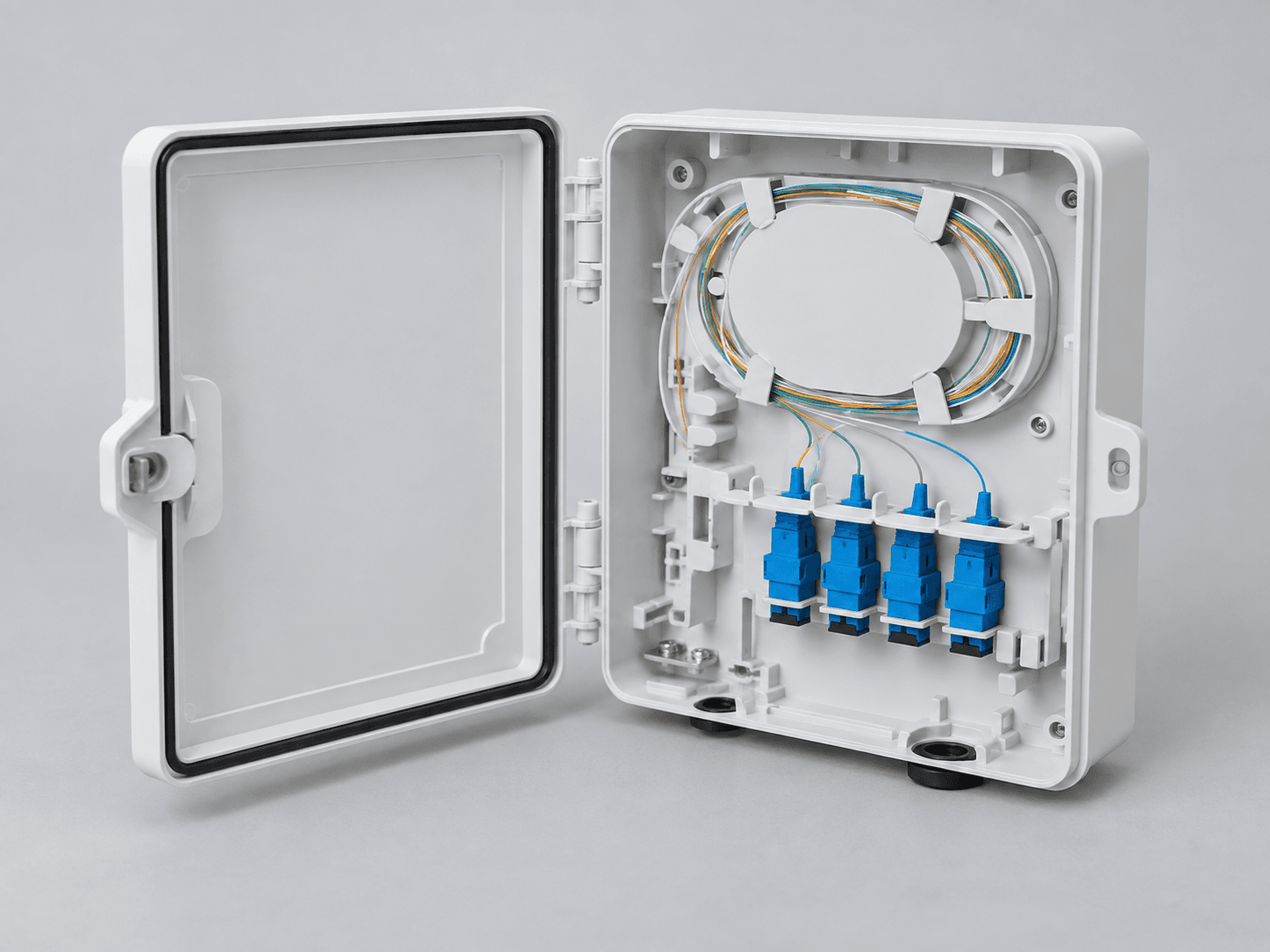
Fiber distribution box prepared for ISP and FTTH operator supply

Operational supply starts with network identity.

Operators need passive products that can be located, installed, maintained and reordered across service areas. Port capacity, splitter arrangement, drop interface and spare strategy must remain connected to network records.

FiberXi supports passive product configuration and supply. Network design, optical budget, active-equipment compatibility, service policy and commissioning remain the responsibility of the operator and its qualified teams.

ODNTopology-linked supply
PORTSubscriber identity
SPARERestoration planning

Connect deployment, operations and replenishment.

A controlled supply program reduces the gap between the rollout BOM and the network that operations must maintain.

01

Standard product families

Define approved variants for cables, splitters, boxes, closures, drops and patching while keeping project exceptions visible.

  • Approved configuration matrix
  • Equipment and enclosure interfaces
  • Exception and substitution control
02

Network identity

Carry region, cabinet, closure, terminal, port and subscriber identifiers into labels and packing where appropriate.

  • Service-area and asset identifiers
  • Port and drop schedules
  • Packing list alignment
03

Rollout releases

Plan quantities and delivery groups around construction phases, contractor assignments and actual storage capacity.

  • Phase and region quantities
  • Site or contractor packages
  • Receiving and shortage disposition
04

Spares and repeat supply

Build restoration stock from installed compatibility and risk, then control reorder revisions and replenishment triggers.

  • Critical compatible spares
  • Storage and ownership
  • Revision and replenishment control

Use one product identity from rollout to restoration.

01

Standardize

Release approved passive products, interfaces, evidence and labeling rules.

02

Deploy

Group quantities by network release and reconcile packages with site records.

03

Sustain

Track compatible spares, revisions, usage and replenishment requirements.

Questions to close before quotation.

Can FiberXi define the operator's ODN design?

FiberXi supports passive product configuration; topology, optical budget, equipment and network acceptance remain with the operator's qualified design team.

Can one approved list cover all network areas?

Only when route, environment, interfaces and installation practices are equivalent. Regional or project exceptions should remain visible.

How should operators plan spare products?

Use installed compatibility, failure modes, service impact, replacement time, storage and replenishment risk rather than a universal percentage.

Can products be labeled with operator asset IDs?

Customer-defined IDs can be reviewed when data format, sequence, material, location and release timing are controlled.

Planning an access-network rollout or replenishment program?

Send the topology, approved product list, rollout quantities, network identifiers and spare requirements for review.

Start an Operator RFQ